
Overview
The Red-necked Ostrich (Struthio camelus camelus) — once native across wide swathes of the Sahel and Sahara — has suffered dramatic decline due to indiscriminate hunting during the civil war, habitat loss, and fragmentation. AWCF, in partnership with African Parks and other conservation bodies, is working to bring this species back to its rightful home. Through a coordinated breeding, release and monitoring programme, our goal is to repopulate select areas of the Sahara, restoring not only birds, but also restoring part of the ecosystem they depend on.
WHY IT MATTERS
- Restoring ecological legacies: Ostriches once shaped the desert landscapes — influencing seed dispersal, vegetation structure, and nutrient cycles. Their absence leaves ecological gaps.
Species survival: As the Red-necked Ostrich becomes rarer, small population numbers risk inbreeding, local extinctions, and loss of genetic diversity. Rewilding strengthens these weak population nodes.
- Enhanced Tourism: This species draw great curiosity as a tourist attraction; thereby contributing significantly to the industry.
Cultural and heritage value: In many Saharan communities, the ostrich is part of shared natural heritage — a symbol of the wild desert, stories, and ancient ecosystems. Bringing them back helps reconnect people to place.
Indicator of ecosystem health: Successful ostrich populations signal that conditions are improving — enough habitat, water, security from hunting — which also benefits many other species.
How We Do It
Captive breeding & incubation: We help raise ostriches in secure, carefully managed facilities. Parents bred in captivity lay eggs, which are incubated under controlled but naturalistic conditions.
- Release & acclimatisation: Once young birds reach maturity and fitness, they are released into protected reserves. Before full release, they often go through acclimatisation pens that mimic desert terrain, exposure, and climate conditions to prepare them for wild living.

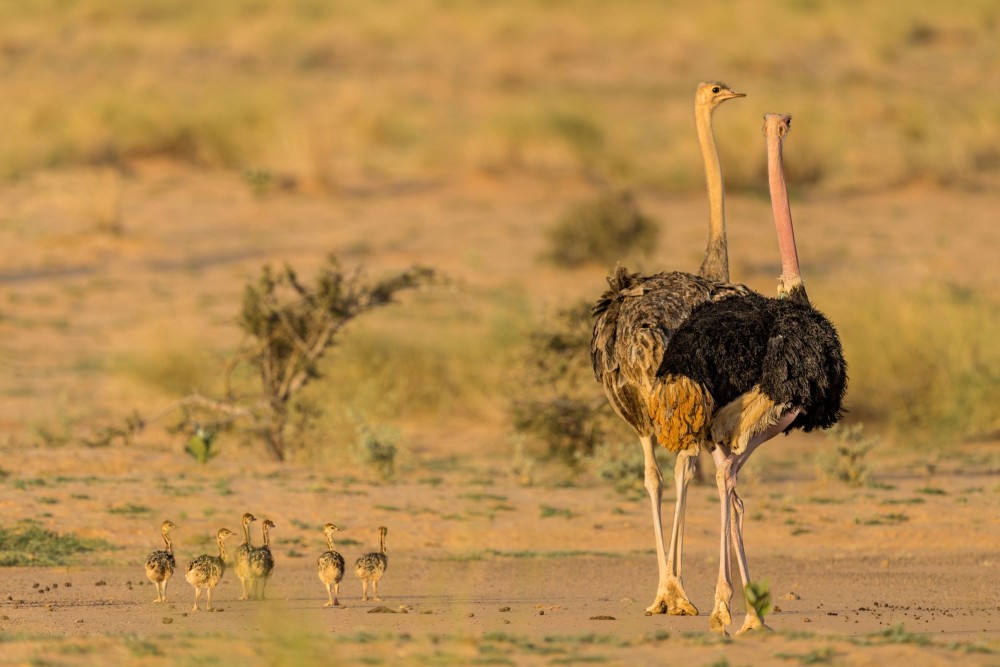
- Monitoring & wild breeding: After release, released birds are monitored to see how they adapt, where they roam, and whether they breed in the wild. Success has already been demonstrated — captive-raised parents of recent reintroductions have produced chicks in the wild.
- Collaboration & local engagement: We work with government conservation authorities, African Parks, Sahara Conservation Fund, local rangers, pastoralist communities, and protected area managers to ensure release sites are safe, to minimize threats (hunting, habitat degradation), and to build local capacity for long-term stewardship.
IMPACT TO DATE
- Birds reintroduced from captive breeding into wild reserves under AWCF-supported projects are now producing chicks in the wild.
- The project has restored populations in areas where ostriches were locally extinct.
- Early signs are strong: wild-born chicks, increasing numbers in release sites, and growing community involvement in monitoring and protection.
How You Can Support
Sponsor Ostrich Families – Help finance breeding, egg incubation, and care during early life.
Support Monitoring Infrastructure – Funding is needed for tracking equipment, release pens, field teams, and anti-poaching patrols.
Secure Release Sites – Contributions can go toward land protection, habitat restoration, and reducing threats (illegal hunting, habitat encroachment).
Outreach & Education – Support awareness campaigns in rural Saharan and Sahelian communities about the value of ostriches and coexistence.